7.4M+
Service records
600+
Unified labels
2
Business consumers
1
Shared fact layer
This case study preserves the work and evidence from my participation.
My role and contributions
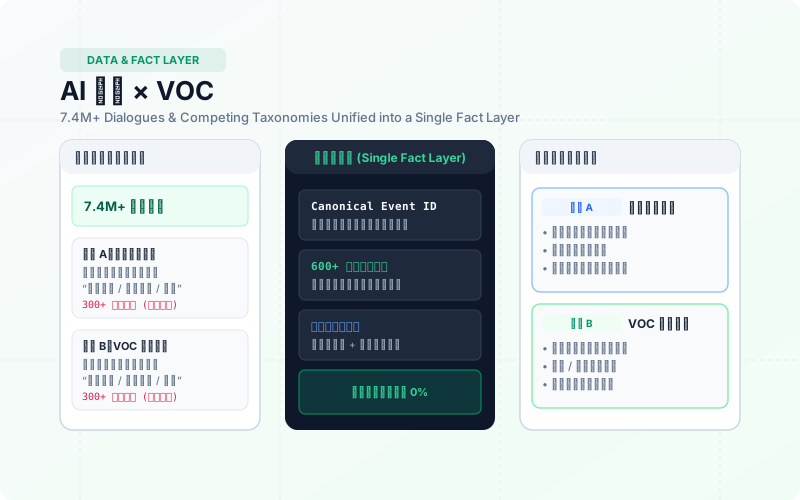
As AI product manager / AI application engineer, I converged two label taxonomies into one fact layer — reframing the problem, designing derived views, and driving cross-team definition reviews.
Background
Bananain's digital R&D group needed data capabilities for both customer service and voice-of-customer analytics.
Challenge
Two label taxonomies serve different goals; merging them directly would destroy their business semantics.
Key decision
Don't unify the trees — unify the underlying facts, then derive a view per consumer, so neither side has to give up its own semantics.
Solution
I reframed the problem: don't unify the trees — unify the underlying facts, then derive separate views for customer-service operations and VOC attribution.
Results
- Covers 7.4M+ service records and 600+ labels.
- Preserves shared facts with independent business views for each consumer.
Why it matters
A unified fact layer lets customer service and VOC each keep their semantics while sharing one auditable underlying dataset — no more conflicting definitions, and future use cases can reuse the same fact layer.
Lessons learned
Build representative samples and cross-team definition reviews before expanding label migration.